

Dr. Kollock, professor at the University of Tulsa, incorporates state-of-the-art instrumentation into the exercise and sports science curriculum to advance student preparation for professional roles in the movement sciences. By engaging with Noraxon’s technology, students develop applied competencies in kinesiological assessment methods and strengthen their capacity for evidence-based practice.
Integrating Noraxon Technology into Exercise and Sports Science Education
The University of Tulsa employs Noraxon’s MR4 software to integrate a wide range of Noraxon and complementary biomechanical instrumentation:
These tools are used in foundational biomechanics courses and advanced student research, giving learners the opportunity to explore muscle activation, ground reaction forces, joint kinematics, and more.
Enhancing Learning Through Labs & Undergraduate Research
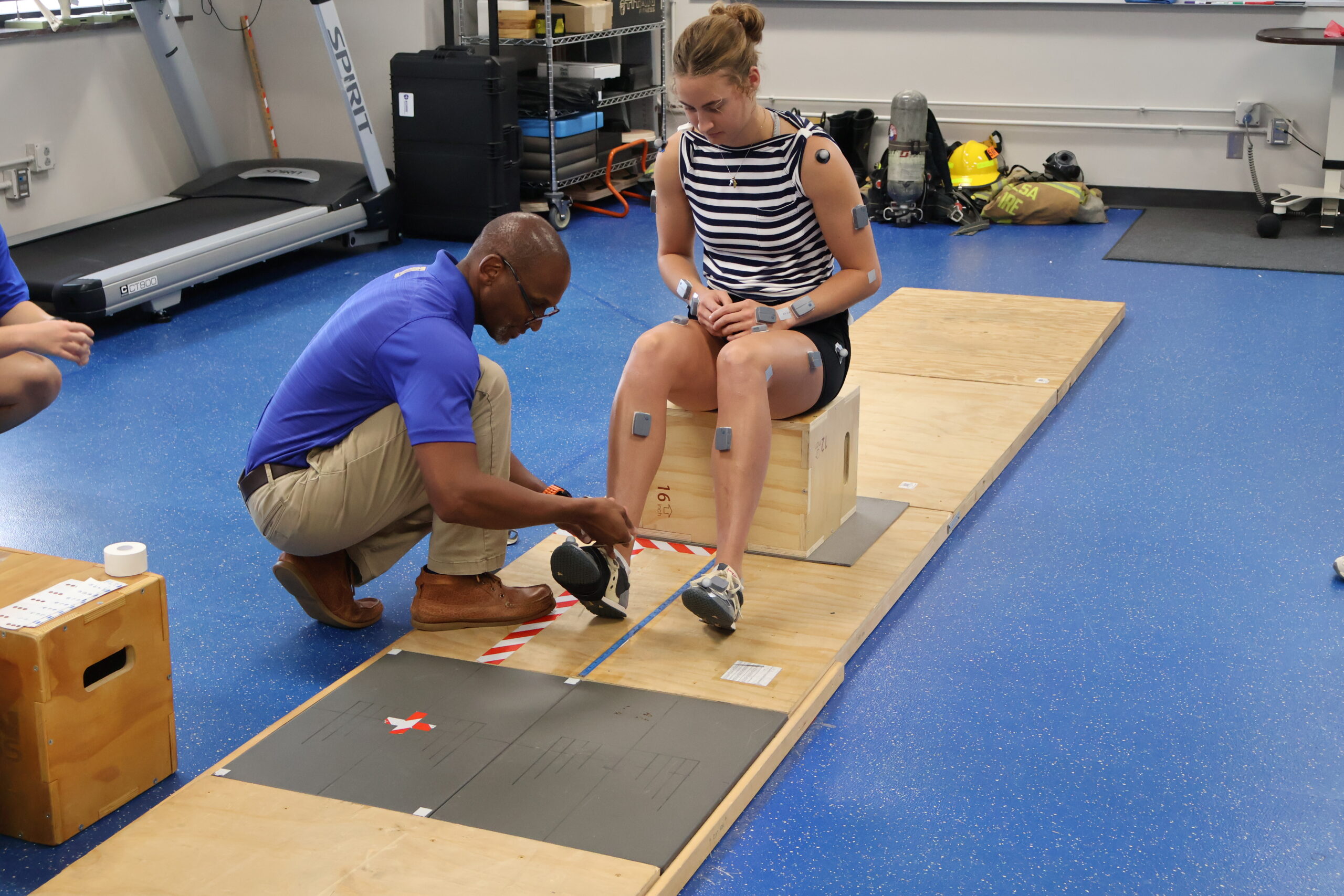
Noraxon technology is fully integrated into their biomechanics laboratory course, enhancing hands-on learning and application. Through the Tulsa Undergraduate Research Challenge (TURC), students have the opportunity to extend their classroom experiences into independent inquiry. Each summer, TURC empowers students to design and carry out original research projects utilizing cutting-edge technology.
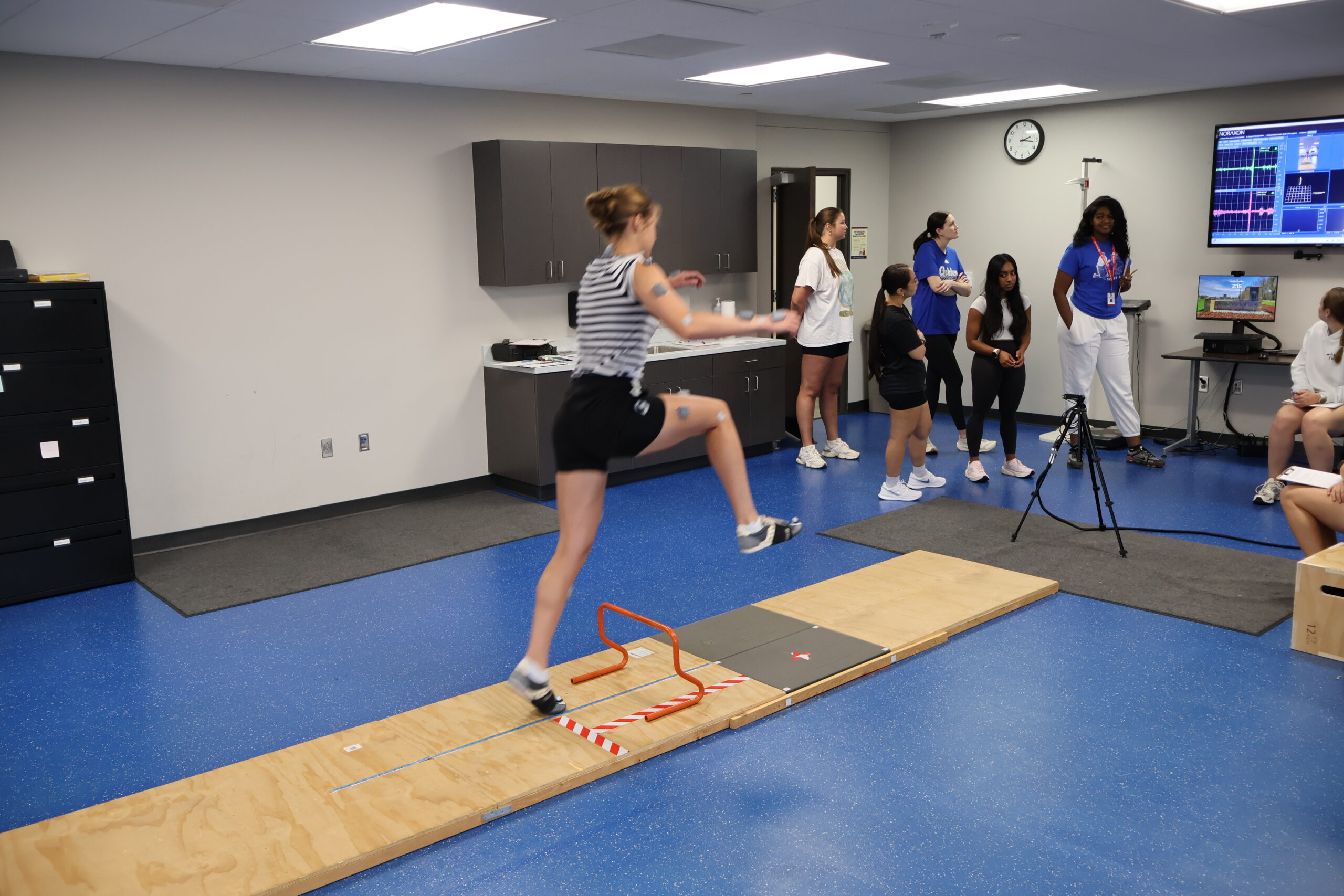
Biomechanics (ATRG 4041): In this laboratory course, students utilize IMU sensors to perform gait and jump-landing assessments. Using MR4 software, they analyze performance data through charts and tables, enhancing their understanding of participant performance and potential limitations.
Tulsa Undergraduate Research Challenge (TURC 4100): Students design faculty-mentored research projects, often using IMUs to study human movement. Past biomechanics projects have leveraged the Noraxon Portable Lab with full-body IMU sensors and integrated force plates to analyze how military load carriage affects movement mechanics during single-leg landings. These tools help students build valuable skills for their future careers.
Preparing Students for Real-World Careers
At the University of Tulsa, they are committed to unlocking the full potential of human ingenuity by preparing students for the challenges of tomorrow. By embedding cutting-edge technology into the classroom and lab, students gain hands-on experience with digital tools, research methods, and data analysis. These experiences not only build critical thinking and problem-solving skills but also give students the confidence to apply their knowledge in real-world settings. Through this combination of innovation and practical learning, University of Tulsa empowers the next generation to lead, create, and excel in an ever-changing world.
“These experiences not only build critical thinking and problem-solving skills but also give students the confidence to apply their knowledge in real-world settings,” says Dr. Kollock.

Stay tuned for more stories in our “Noraxon in the Classroom” series, where we spotlight universities using biomechanics technology to enhance education and research.