

Functional Symmetry
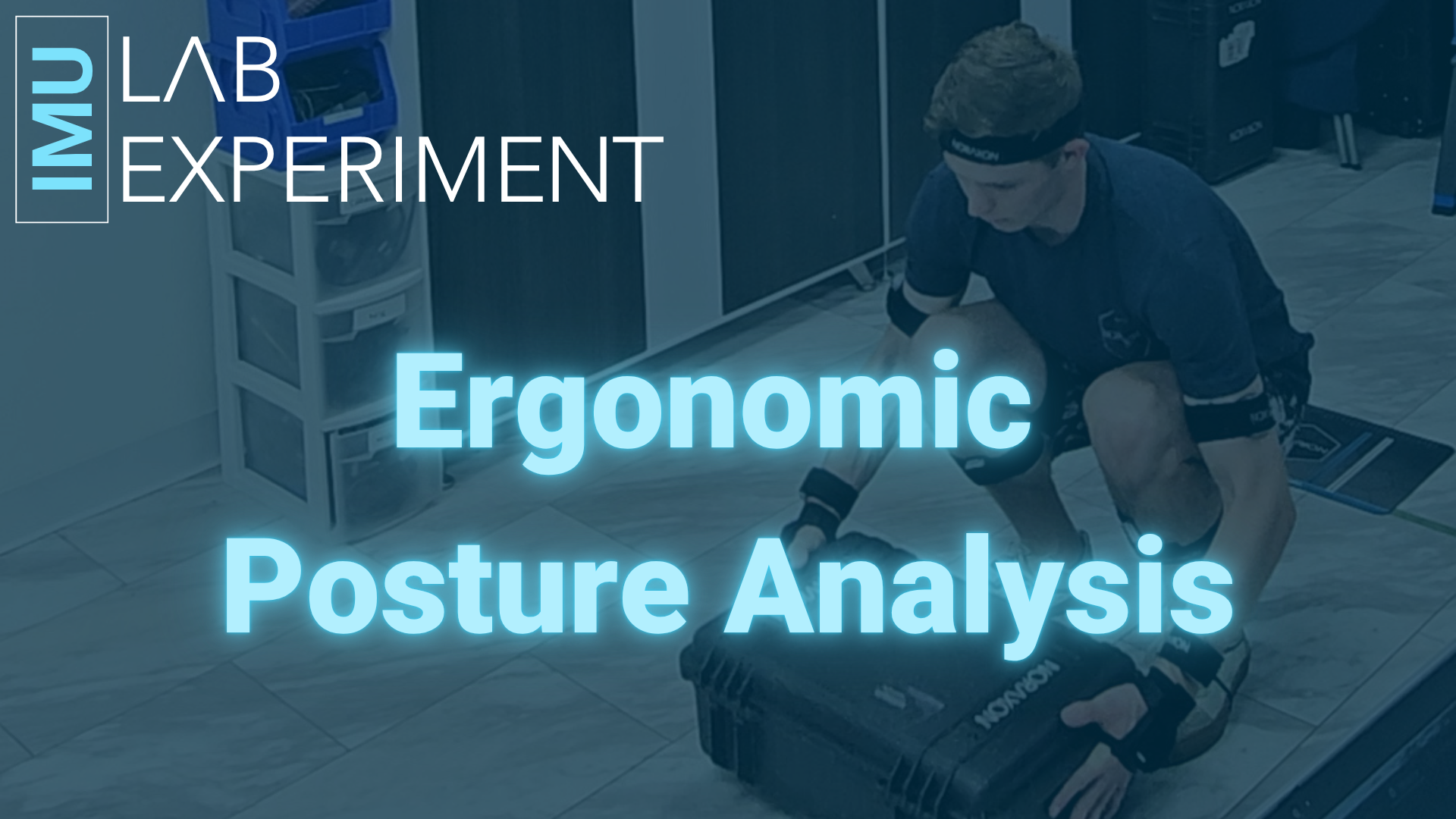
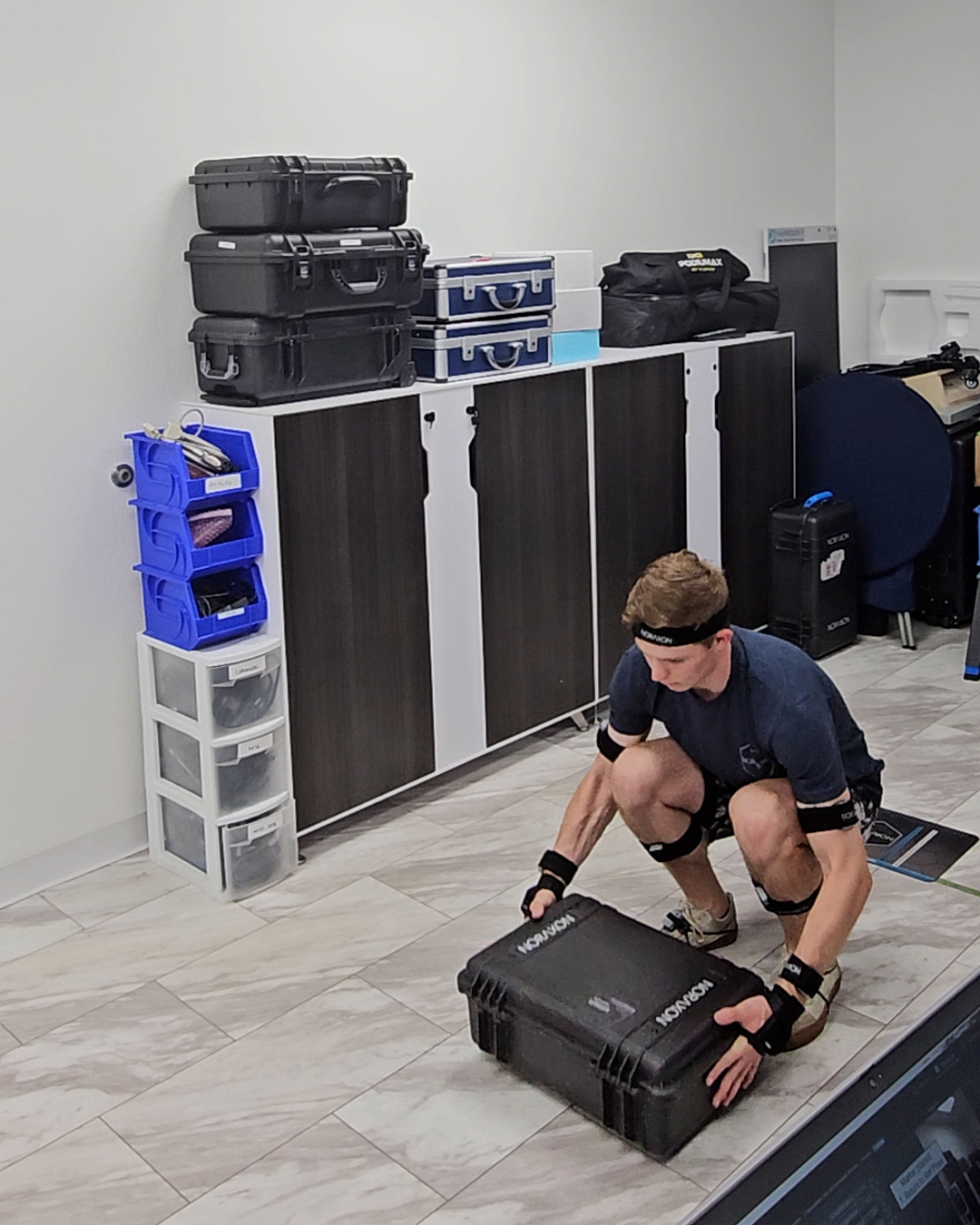
In this lab, students will use an IMU-based motion capture system to evaluate posture and lifting mechanics during selected lifting tasks.
Students can compare different lifting styles or load conditions to examine how movement strategies change under varying demands.
Why Analyze
Ergonomic Posture?
Analyzing ergonomic posture helps identify inefficient movement patterns, excessive joint loading, and poor body mechanics that may contribute to fatigue, discomfort, or musculoskeletal strain over time.
By evaluating posture during tasks such as lifting, reaching, or prolonged standing, students can better understand how movement technique influences safety, efficiency, and long-term physical health in workplace and clinical environments.
Learning Objectives for Students
Evaluate Posture During Lifting Tasks
Students will examine 3D body alignment and joint positioning during lifting movements to understand how posture influences movement efficiency and mechanical loading.
Analyze Joint Motion Throughout the Lift
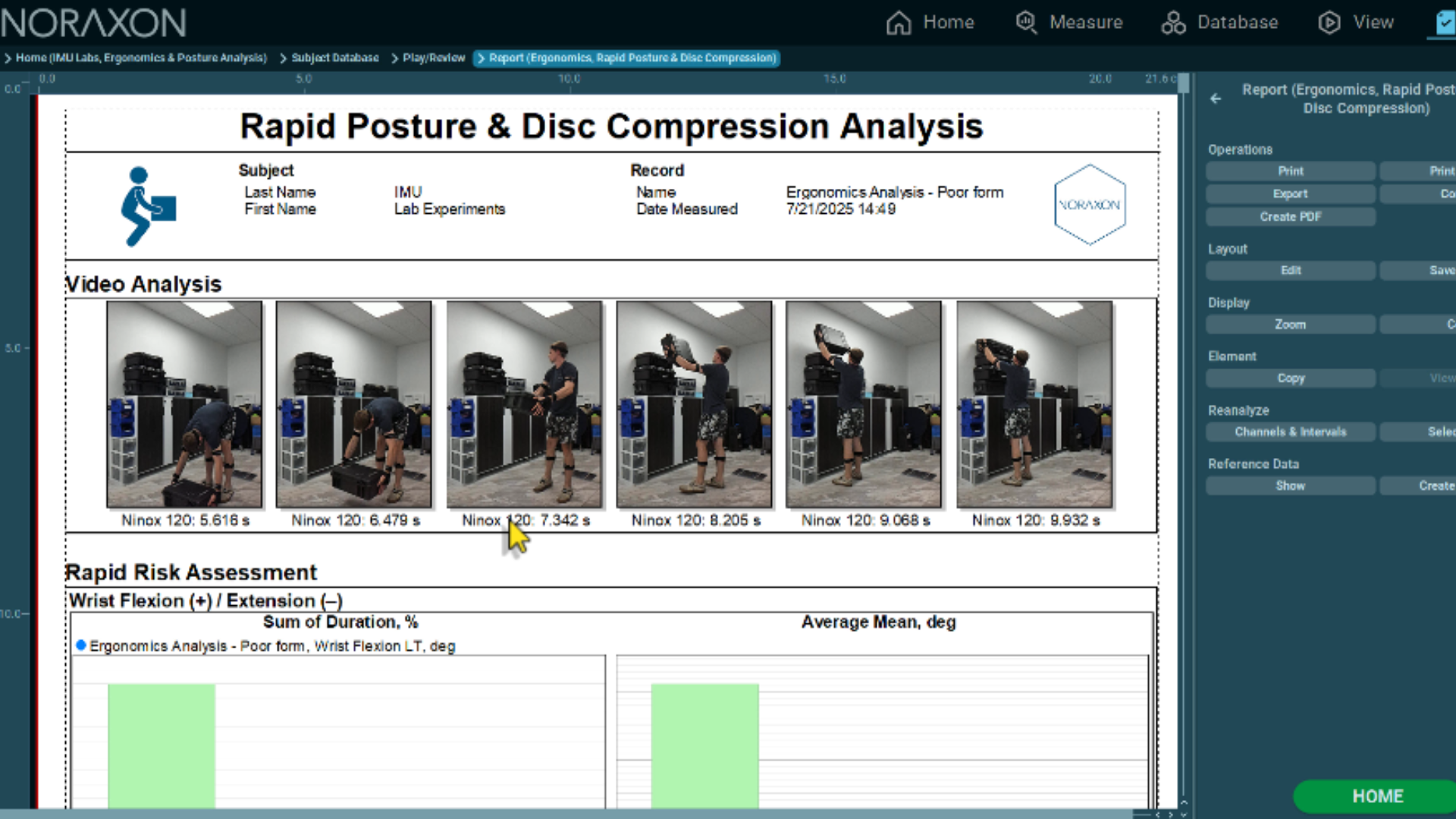
Students will assess trunk, hip, knee, shoulder, and wrist kinematics during different phases of lifting to understand how each joint contributes to safe and effective movement.
Compare Ergonomic Risk Across Conditions
Students will compare lifting techniques or load scenarios to identify movement patterns associated with increased strain, reduced stability, or higher musculoskeletal risk.