

Jump Analysis
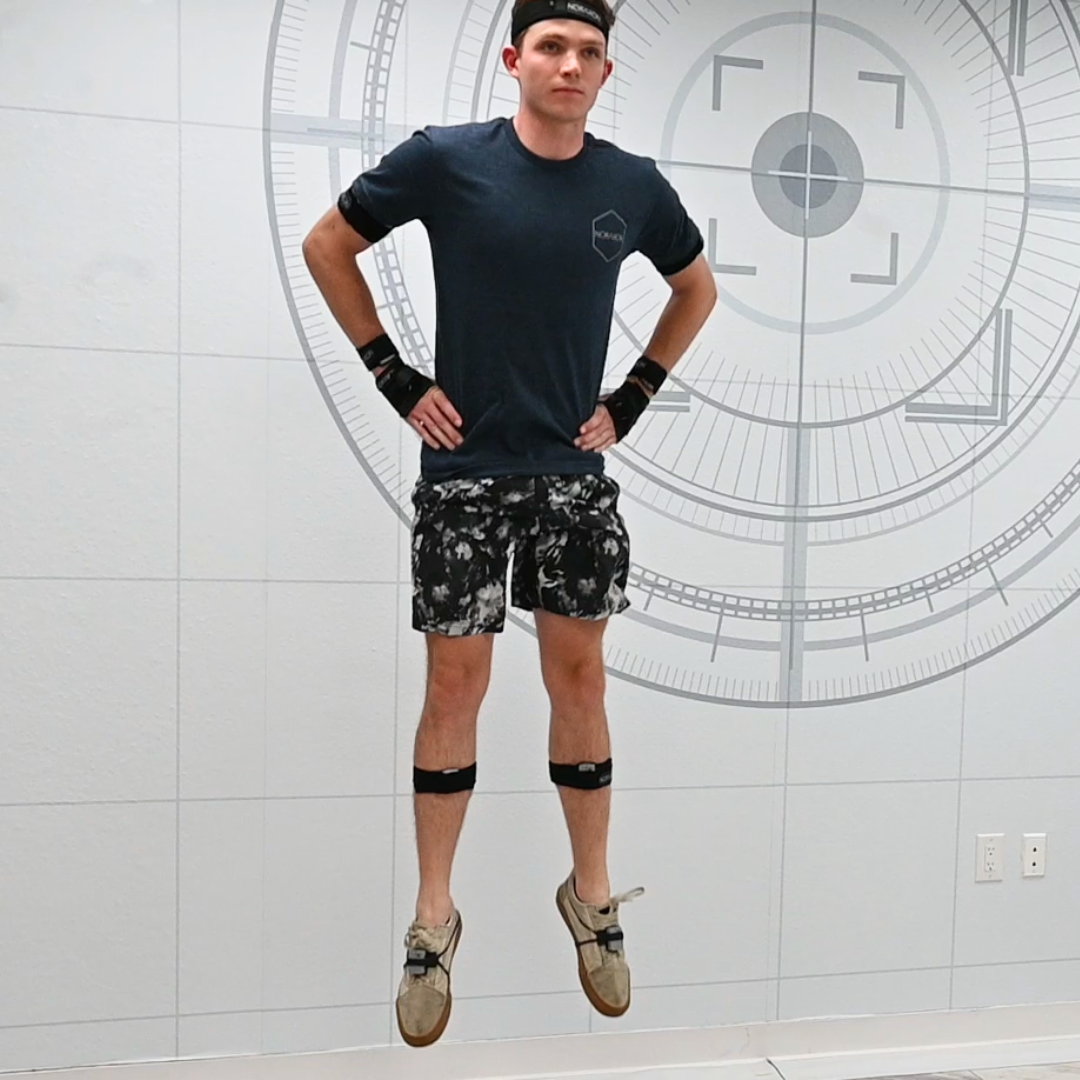
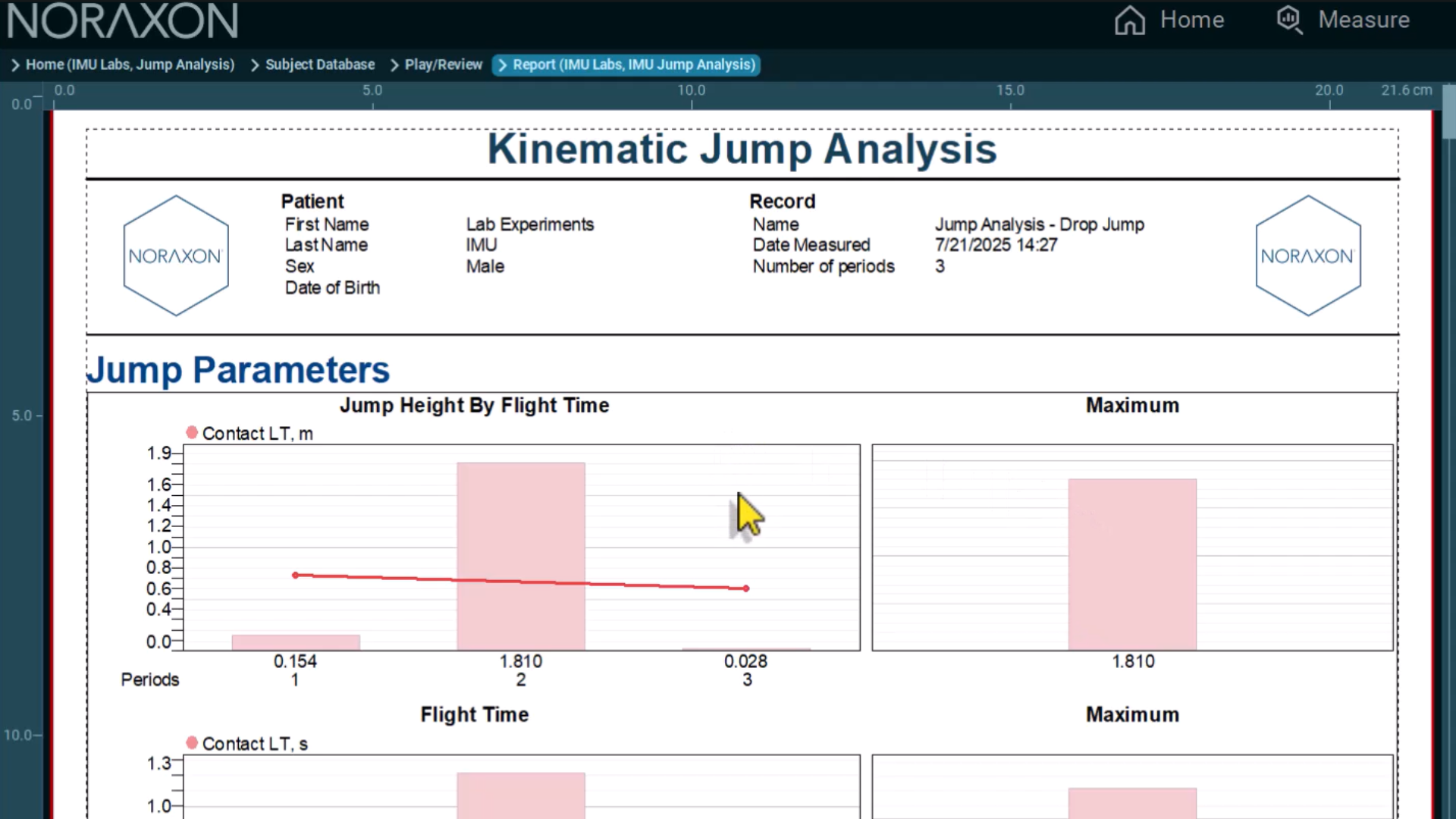
In this lab, students will use an IMU-based motion capture system to measure and analyze lower-limb movement during a countermovement jump. Students will collect and evaluate 3D joint angle data of the hip, knee, and ankle throughout the jump phases: descent, take-off, flight, and landing; to understand movement coordination and symmetry between limbs.
Why Analyze
Jump Kinematics & Symmetry?
Asymmetries in joint angles, timing, or range of motion during the jump phases, can indicate compensatory strategies, limb dominance, or underlying strength and mobility deficits that may limit performance or increase injury risk.
By analyzing 3D joint kinematics, phase timing, and side-to-side differences during a countermovement jump, students will be able to identify how each joint contributes to jump height, control, and landing mechanics. This approach supports objective evaluation of power generation, coordination, and symmetry; making IMU-based jump analysis a valuable tool for performance profiling, rehabilitation, and return-to-play decision making in both athletic and clinical populations.
Learning Objectives for Students
Quantify Lower Limb Jump Mechanics
Students will analyze 3D hip, knee, and ankle kinematics across the phases of a countermovement jump to understand coordination, range of motion, and angular velocity contributions to performance.
Evaluate Symmetry and Limb Contribution
Students will compare left-right joint angles, timing, and phase-specific metrics to identify asymmetries, limb dominance, and compensatory strategies that may influence jump height, landing control, or injury risk.