

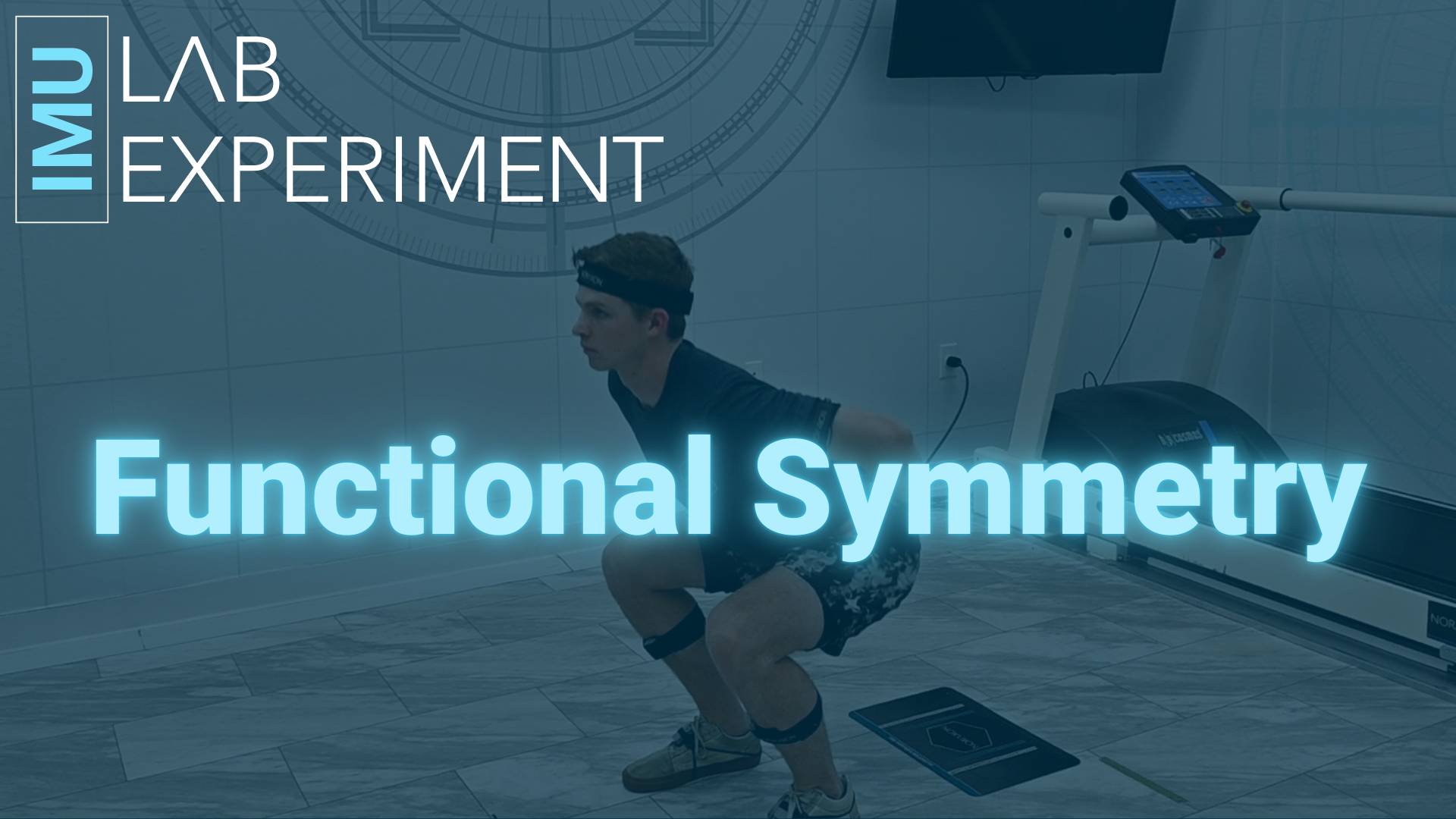
Functional Symmetry
In this lab, students will use an IMU-based motion capture system to evaluate functional movement symmetry during a selected exercise. Students can record both bilateral and unilateral trials and compare movement patterns between the left and right sides.
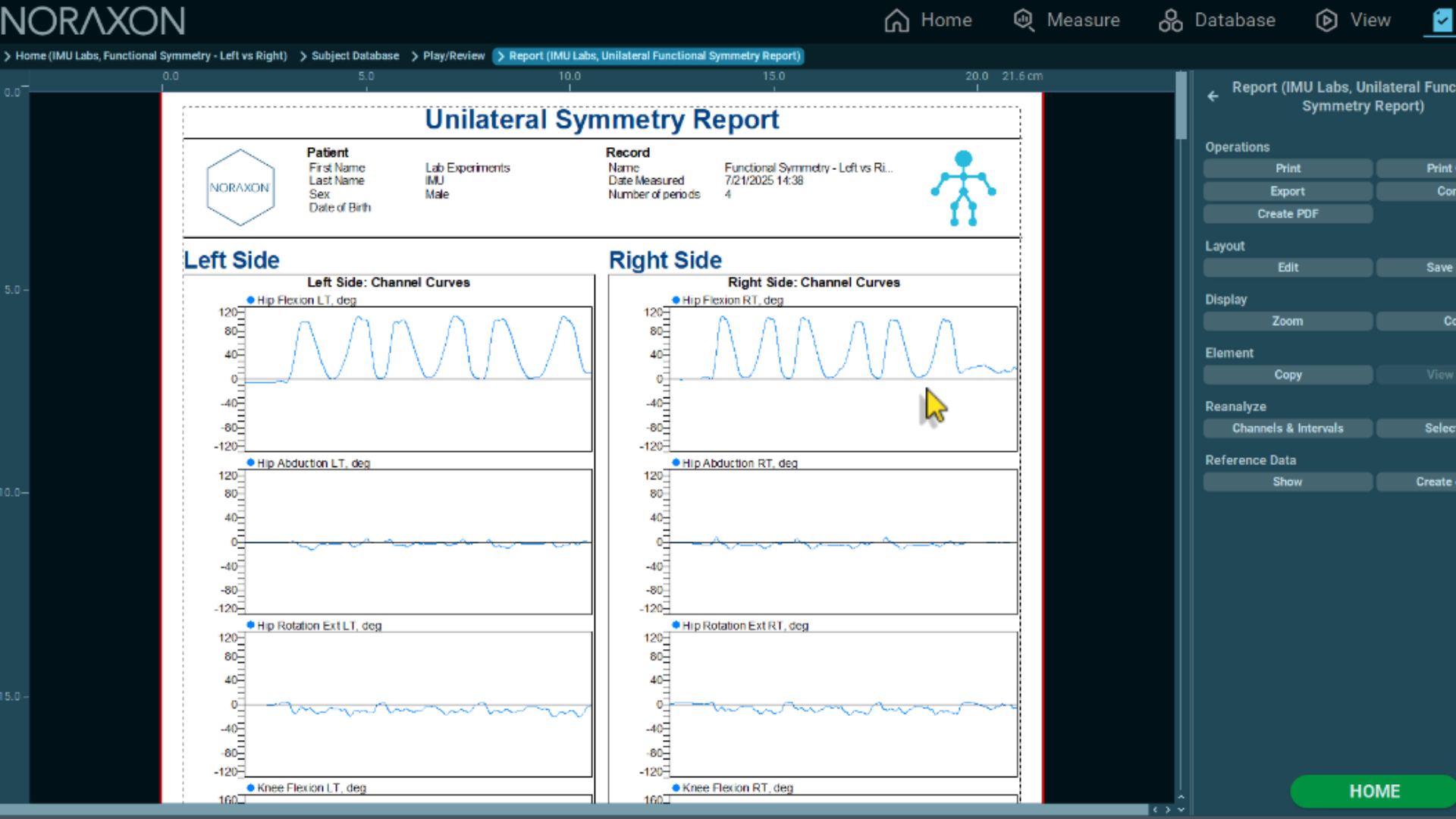
Using 3D kinematic data, students will examine joint angles, range of motion, and movement timing to see how each limb contributes to the task and whether one side moves differently than the other.
Why Analyze Functional Symmetry?
Differences between the left and right sides during movement can point to limb dominance, strength or mobility differences, or compensatory movement strategies. These asymmetries can affect performance and may also be relevant in injury prevention or rehabilitation.
By analyzing joint kinematics during functional tasks, students can objectively evaluate how evenly movement demands are shared between limbs. This type of analysis is commonly used in sports performance, clinical rehabilitation, and movement research to better understand coordination and movement quality.
Learning Objectives for Students
Analyze Joint Motion During Functional Tasks
Students will examine 3D joint angles and range of motion during the selected exercise to understand how each joint contributes to the overall movement.
=Interpret Movement Asymmetries
Students will discuss how side-to-side differences may relate to movement efficiency, coordination, performance limitations, or potential injury risk in athletic and clinical settings.
Compare Left and Right Limb Mechanics
Students will compare joint angles, movement timing, and phase characteristics between limbs to identify asymmetries or differences in movement strategy.